How to Layer Vitamin C, Niacinamide, Retinol and Acids
A simple layering plan that separates actives by purpose, time of day and skin tolerance — so you get results without the irritation.
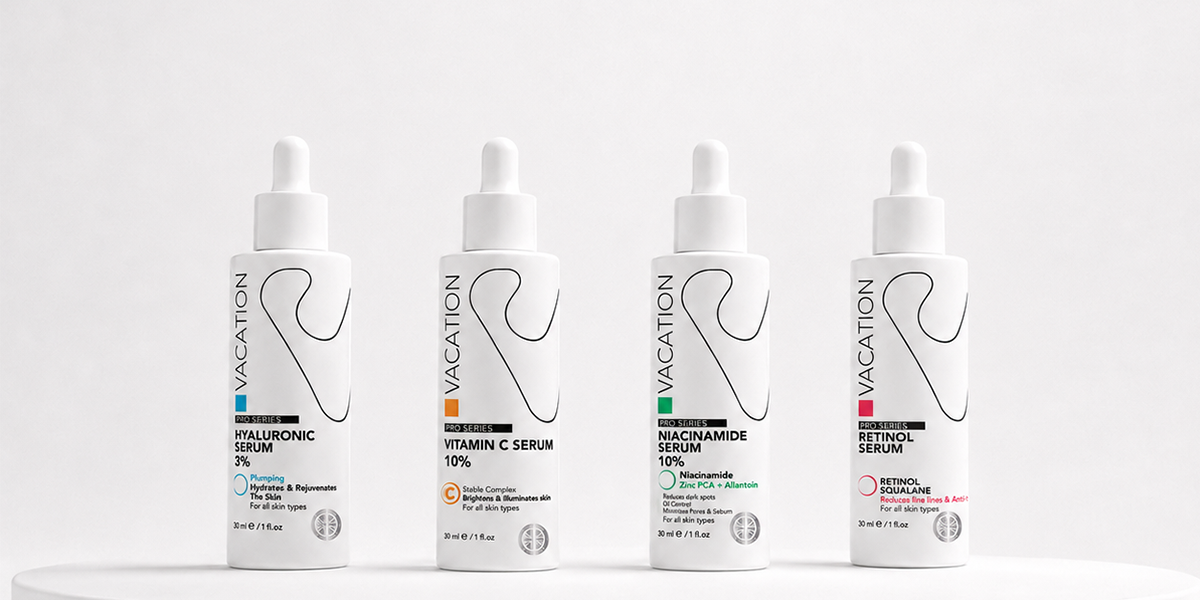
More active ingredients do not automatically produce better skin. Vitamin C, niacinamide, retinol and exfoliating acids can address different concerns, but introducing them all at once makes irritation more likely and makes it difficult to identify what is helping. A good layering plan separates products by purpose, time of day and skin tolerance.
The simplest rule is to apply products from lighter to richer textures, then finish the morning with sunscreen. The more important rule is to avoid unnecessary overlap between potentially irritating actives.
Vitamin C: an antioxidant morning step
Vacation Vitamin C 10% Serum is designed to support antioxidant protection and a brighter, more even appearance. Apply a few drops after cleansing in the morning, then follow with moisturizer and broad-spectrum sunscreen. Sunscreen remains essential; an antioxidant serum complements sun protection but does not replace it.
Vitamin C can also be used in the evening, but morning use creates a clear, easy routine. If you are new to active skincare, start every other morning. Temporary mild tingling can occur with some formulas, but persistent burning, redness or swelling is a reason to stop.
Niacinamide: the flexible supporting ingredient
Vacation Niacinamide 10% + Zinc PCA Serum can fit into the morning or evening. Niacinamide supports the skin barrier and is commonly used in routines for visible pores and oiliness. It does not need to be separated from vitamin C because of an old compatibility myth; modern cosmetic formulas can generally be used in the same routine when the skin tolerates them.
If layering both, apply the lighter product first or follow the brand’s directions when textures are similar. Sensitive users may prefer vitamin C in the morning and niacinamide at night, not because the combination is forbidden, but because a shorter routine is easier to tolerate.
Retinol: a gradual night treatment
Vacation Retinol Serum 1% is a concentrated nighttime product. Retinoids can improve the appearance of uneven texture and fine lines, but they frequently cause dryness or irritation during the adjustment period — though less so with the squalane incorporated in Vacation Retinol Serum to counter dryness. Use a pea-sized amount for the entire face once or twice a week, then increase only if the skin remains comfortable and the label allows it.
Apply to dry skin after cleansing. Follow with moisturizer, or “sandwich” the retinol between two thin layers of moisturizer if you are prone to irritation. Keep it away from eyelid margins, lip corners and the creases beside the nose. Do not use topical retinoids during pregnancy; if pregnant, breastfeeding or planning pregnancy, discuss skincare actives with a healthcare professional.
Acids: schedule exfoliation instead of stacking it
Alpha-hydroxy acids such as glycolic and mandelic acid loosen bonds between surface cells, while salicylic acid is oil-soluble and often used for clogged pores. Vacation Sebio-Control Glycolic Acid Serum contains a 10% combination of glycolic, azelaic and mandelic acids, so it should be treated as a principal active, not an extra step added to every routine.
Use an acid serum on a separate evening from retinol when beginning. Combining both in one session may create avoidable irritation even if an experienced user can eventually tolerate it. Start one evening a week, moisturize afterward and avoid use on sunburned, freshly shaved or compromised skin. The FDA notes that alpha-hydroxy acids can increase sun sensitivity, reinforcing the need for daily sunscreen.
A simple weekly schedule
- Morning: cleanse, vitamin C, moisturizer, sunscreen.
- Retinol evenings: cleanse, retinol, moisturizer.
- Acid evening: cleanse, acid serum, moisturizer.
- Recovery evenings: cleanse, Vacation Hyaluronic Acid Serum 3% or niacinamide, then moisturizer.
Hyaluronic acid is a hydrating support step rather than an exfoliant. Apply it to slightly damp skin and seal it with moisturizer. Recovery nights are part of an effective routine, especially when the skin feels tight or looks flaky.
Introduce one variable at a time
Patch-test each product and use it for at least a couple of weeks before adding another active. If you develop persistent burning, marked peeling, swelling or an itchy rash, stop the actives and simplify to gentle cleanser, moisturizer and sunscreen until the skin recovers. People with eczema, rosacea or a history of reactions should ask a dermatologist for a tailored plan.
Layering is less about memorizing chemical rules and more about managing total irritation. Give each active a clear job, separate retinol and acids initially, protect the skin every morning, and let consistency — not complexity — drive the routine.
Season and environment can change tolerance. A schedule that works in humid weather may become too drying in winter, after travel or during treatment for acne. Reduce frequency before adding more moisturizer layers over visibly irritated skin, and restart actives one at a time after the barrier feels normal. The calendar is a guide; the skin’s response sets the pace.
Editorial references
- American Academy of Dermatology. “Retinoid or retinol?” aad.org
- American Academy of Dermatology. “Skin care during pregnancy.” aad.org
- U.S. Food and Drug Administration. “Alpha Hydroxy Acids.” fda.gov
- U.S. Food and Drug Administration. “Beta Hydroxy Acids.” fda.gov
- Majestic Biopharma. Vacation Serums official product pages. e-majestic.com/collections/vacation